

| Host / Isotype | Clonality | Applications | MW (kDa) | Reactivity |
| Mouse IgG1 | Monoclonal | WB, IHC-P, IF/ICC, ELISA | 16 | Human |
| Application Key | WB-Western Blot IP-Immunoprecipitation IHC-Immunohistochemistry IHC-P-Immunohistochemistry-Paraffin |
| Reactivity Key | H-Human M-Mouse R-Rat Mk-Monkey B-Bovine Pg-Pig Hm-Hamster Dg-Dog C-Chicken X-Xenopus Z-Zebrafish |
| Applications Dilutions | |
| The application notes include recommended starting dilutions;optimal dilutions/concentrations should be detemined by the end user. | |
| WB(Westem Blotting) IHC-P(Immunohistochemistry-Paraffin) IF/ICC(Immunofluorescence/Immunocytochemistry) ELISA(Enzyme-linked Immunosorbent Assay) |
WB=1:1000-5000 IHC-P=1:100-500 IF/ICC=1:100-500 |
| Product Information | |
| Conjugate | Unconjugate |
| Specificity | Cystatin C Mouse Monoclonal Antibody detects endogenous levels of Cystatin C protein. |
| Purification | Affinity purification |
| Concentration | 1mg/ml |
| Format | Liquid |
| Formulation | In PBS, pH 7.4, containing 0.02% sodium azide,0.5% BSA and 50% glycerol. |
| Shipping | Gel Pack |
| Storage | Store at -20°C least 1 year from the date of shipment. avoid repeated freeze/thaw cycles. Aliquots may be stored at +4°C for 1-2 weeks. |
| UniProt ID | |
| Entrez Gene ID | |
| Product Description | |
Cystatin C also known as CYSC, CST3 is a crucial cysteine protease inhibitor that plays a significant role in regulating proteolytic activity in extracellular environments, making it vital for maintaining cellular homeostasis and preventing tissue damage. Cystatin C is primarily secreted by various cell types and forms a two-fold symmetric dimer, which is essential for modulating cysteine protease activity and influencing the expression of class II major histocompatibility complex molecules. Cystatin C serves as a reliable biomarker for kidney function and glomerular filtration rate, with expression levels providing insights into renal health. Mutations in the cystatin C gene can lead to protein aggregates, which are associated with hereditary cerebral amyloid angiopathy and increased risk of cerebral hemorrhage.
|
| Product Image Gallery | |
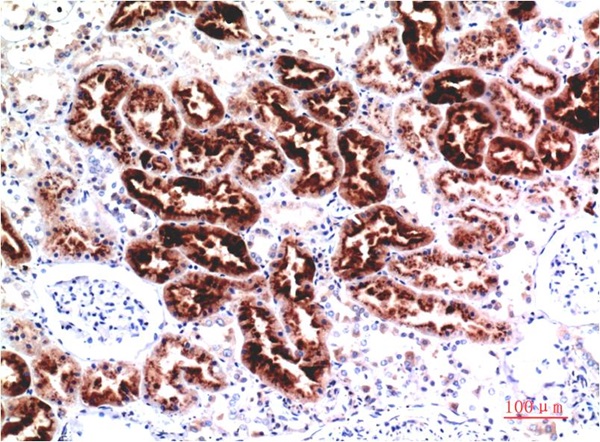 Immunohistochemical analysis of paraffin-embedded Human kidney tissue, using Cystatin C Mouse Monoclonal Antibody (EAB14915) at 1:200 dilution.
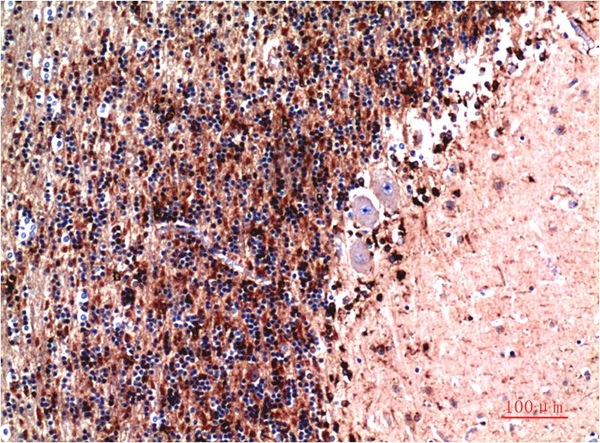 Immunohistochemical analysis of paraffin-embedded Human brain tissue, using Cystatin C Mouse Monoclonal Antibody (EAB14915) at 1:200 dilution.
|
