|
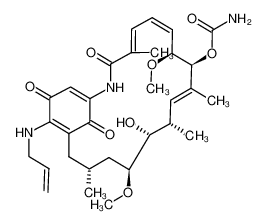
17-AAG (CAS: 75747-14-7)
|
| SKU-Pack Size | Availability | Size | Price | |
| EBC51010-1ML | In Stock | 1mL(10mM in DMSO) | �89.70 | |
| EBC51010-10MG | In Stock | 10mg | �84.50 | |
| EBC51010-25MG | In Stock | 25mg | �159.90 | |
| EBC51010-50MG | In Stock | 50mg | �239.20 | |
| EBC51010-100MG | In Stock | 100mg | �360.10 |
| Please Select The Country You Are In To Find Your Local Distributor. |
| OlaSciences | Phone:+33 (0) 9 77 4001 556 | |
| 87, rue des Suisses 65000 Nanterre, | E-mail:ola@olasciences.com | |
| France | France | Web:www.olasciences.com |
| Product Information | |||||||||||||||||||||
| Product | 17-AAG (CAS: 75747-14-7) | ||||||||||||||||||||
| Synonym(s) | Tanespimycin; NSC 330507;BMS 722782; KOS953; CP 127374; 坦螺旋霉素; 17-AAG | ||||||||||||||||||||
| Chemical Name | 17-Demethoxy-17-(2-propenylamino)-geldanamycin | ||||||||||||||||||||
| Application | 17-AAG is a potent heat shot protein 90 Hsp90) inhibitor for BT474 tumor cells, derived from geldanamycin. | ||||||||||||||||||||
| CAS Number | 75747-14-7 | ||||||||||||||||||||
| Purity | ≥99% | ||||||||||||||||||||
| Molecular Weight | 585.69 | ||||||||||||||||||||
| Molecular Formula | C₃₁H₄₃N₃O₈ | ||||||||||||||||||||
| SMILES | O=C(C(NC(/C(C)=C/C=C\[C@H](OC)[C@H](/C(C)=C/[C@@H]([C@H]([C@H](C[C@@H](C1)C)OC)O)C)OC(N)=O)=O)=CC2=O)C1=C2NCC=C | ||||||||||||||||||||
| Target & IC50 | Hsp90: = 5 μM | ||||||||||||||||||||
| Solubility | DMSO: 58.0 mg/mL (100 mM) | ||||||||||||||||||||
| Preparing Stock Solutions |
|
||||||||||||||||||||
| Shipping | Gel Pack | ||||||||||||||||||||
| Storage | Store at -20°C | ||||||||||||||||||||
| Research Use | For Research Use Only. Not Intended for Diagnostic Or Therapeutic Use. | ||||||||||||||||||||
| Product Description | |
17-AAG also known as Tanespimycin is a benzoquinone ansamycin that has become a compound of interest in molecular chaperone research. It is known to inhibit Heat Shock Protein 90 (HSP90), a chaperone protein that plays a significant role in the folding, stability, and function of many client proteins, including those involved in signal transduction, cell cycle control, and survival. By binding to the ATP-binding domain of HSP90, 17-AAG disrupts its function, leading to the degradation of client proteins and the investigation of their cellular pathways. This property is particularly useful in the study of protein homeostasis and the cellular response to stress. In research environments, 17-AAG is employed to understand the mechanisms of action of HSP90 inhibitors and to explore the potential for targeting protein folding in various conditions. Furthermore, the compound is used to dissect the complex network of protein interactions that are critical for malignant transformation and to study the potential of HSP90 inhibitors in managing these processes. |
| Specific Protocols | |